5 Commercial Lighting Upgrades That Pay for Themselves
Why Lighting Is Your Biggest Energy Opportunity
Lighting accounts for nearly 40% of a typical commercial building's electricity consumption. For business owners and facility managers, this represents both a significant cost and a massive opportunity. Modern lighting technology has advanced so rapidly that most upgrades pay for themselves within 12 to 24 months through energy savings alone.
Beyond the direct cost savings, upgraded lighting improves employee productivity, enhances customer experience, and demonstrates your commitment to sustainability — increasingly important factors for both talent recruitment and client relations.
1. LED Retrofit for Existing Fixtures
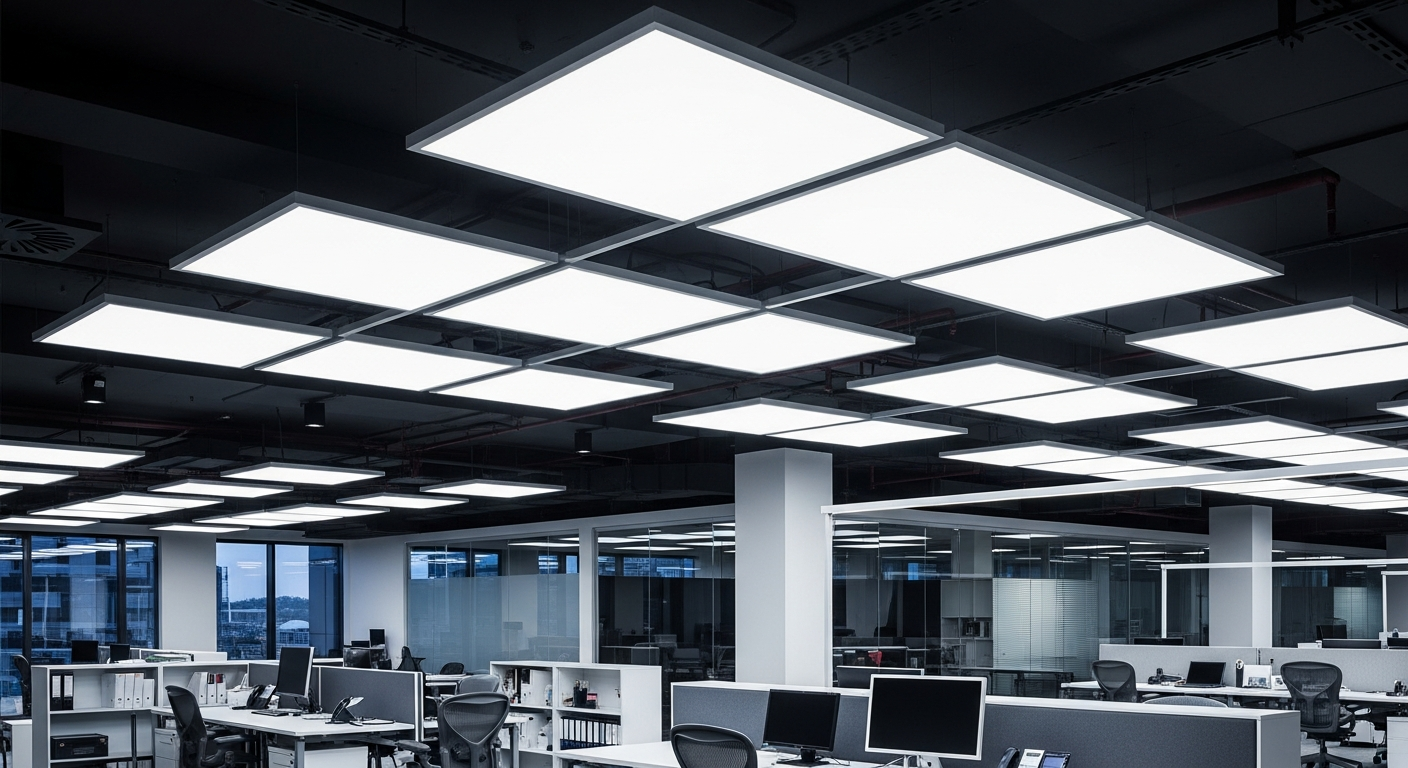
The simplest and most cost-effective upgrade is replacing fluorescent tubes and traditional bulbs with LED equivalents. LED retrofits can reduce lighting energy consumption by 50–75% while providing better light quality and lasting 3–5 times longer than fluorescent alternatives.
For a typical 10,000 square foot office space, this translates to annual savings of $3,000 to $6,000 in electricity costs. The retrofit itself typically costs $5,000 to $10,000, meaning you'll recoup your investment in as little as one year.
Choosing the Right Color Temperature
Color temperature matters more than most people realize. For office environments, 4000K (neutral white) provides an alert, productive atmosphere without the harshness of daylight-equivalent 5000K+ lighting. Retail spaces benefit from warmer 3000K lighting that makes products and spaces feel inviting.
2. Occupancy and Vacancy Sensors
Even with efficient LED lighting, energy is wasted when lights stay on in unoccupied spaces. Occupancy sensors automatically turn lights on when someone enters a room and off after a set period of inactivity. Studies show that occupancy sensors reduce lighting energy use by an additional 30–50% in conference rooms, restrooms, break rooms, and storage areas.
Vacancy sensors take a slightly different approach — they require manual turn-on but automatically shut off. This is ideal for private offices and spaces where occupants may prefer to work in natural light when possible.
3. Daylight Harvesting Systems
If your building has windows or skylights, daylight harvesting sensors can dim or turn off artificial lighting when natural light is sufficient. These photocell-based systems continuously adjust light levels throughout the day, providing consistent illumination while minimizing energy use.
Buildings with significant glazing (window area) can see lighting energy reductions of 40–60% in perimeter zones through daylight harvesting alone. Combined with LED retrofits, some spaces can achieve 80% or greater energy reduction compared to legacy systems.
4. Smart Lighting Controls and Scheduling
Networked lighting control systems allow you to program lighting schedules, create zones, and manage your entire building's lighting from a single dashboard. After-hours cleaning crews, security lighting, and early-morning startup sequences can all be automated for maximum efficiency.
Integration with Building Management Systems
Modern lighting controls can integrate with your HVAC and building management system (BMS), enabling coordinated energy savings. When the lighting system detects that a floor is unoccupied, it can signal the HVAC system to setback temperatures in that zone — multiplying your savings.
5. Exterior and Parking Lot LED Upgrades
Exterior lighting is often the most neglected area, yet it runs for the most hours. Replacing metal halide or high-pressure sodium parking lot fixtures with LED equivalents typically reduces energy consumption by 60–80% while providing better visibility and security. LED fixtures also eliminate the warm-up time that older technologies require, meaning instant-on capability for safety and security applications.
"The best part about commercial lighting upgrades is that they're one of the few capital improvements that literally pay you back every month. The ROI is compelling, and the improved work environment is a bonus." — Pro Electrical Services Team
Getting Started
The first step is a professional lighting audit. Our team will assess your current lighting infrastructure, measure energy consumption, and provide a detailed proposal showing projected savings, payback period, and available utility rebates. Many utility companies offer significant incentives for commercial lighting upgrades, which can reduce your out-of-pocket costs by 30–50%.